Our Latest News & Updates
What Is Microscope Dentistry? Why Seeing More Makes a Difference
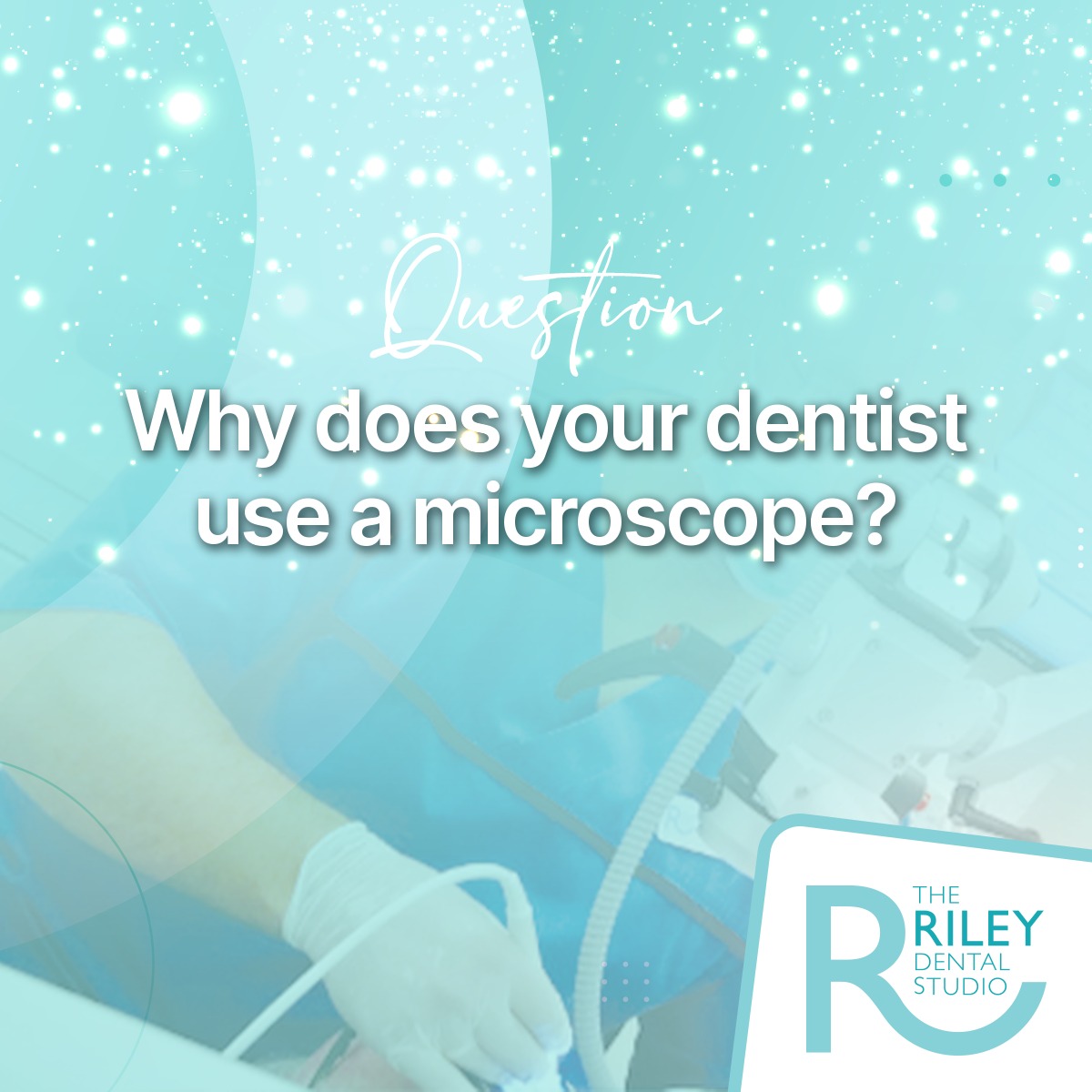
If you’ve looked around our website, or been told that part of your treatment will be carried out under a microscope, you might be wondering what that actually means. Microscope dentistry sounds high-tech, and it is, but the idea behind it is simple: the more clearly your dentist can see, the more precisely they can work.
Here’s a simple guide to what microscope dentistry is, why we use it at our practice in Barlaston, and what it means for you as a patient.
What Is Microscope Dentistry?
Microscope dentistry simply means carrying out examinations and treatment using a dental operating microscope. The microscope sits above the dental chair and gives the clinician a brightly lit, highly magnified view of the tooth they’re working on.
Teeth are small, and many of the details that matter most, such as the edge of a filling, a hairline crack or the tiny canals inside a root, are very hard to see clearly with the naked eye. Magnification makes those details much easier to see.
At The Riley Dental Studio we use the Kaps 900 dental microscope, which provides bright, sharp, high-resolution optics. [CONFIRM: Kaps 900 still the microscope in use]
Why Magnification Makes a Difference
Spotting Problems Earlier
A magnified view can help your dentist pick up early signs of decay and gum problems that might otherwise be easy to miss. Finding things early usually means simpler treatment, which is exactly why regular check-ups and preventative care matter so much.
Keeping More of Your Natural Tooth
When your dentist can see exactly where healthy tooth ends and damaged tooth begins, they can work more precisely and remove only what needs to be removed. Keeping as much of your natural tooth as possible is one of the main goals of modern dentistry.
Gentler on the Surrounding Area
Greater precision also means less unnecessary disturbance to neighbouring teeth, existing restorations and the gums around the tooth being treated, which can help with comfort and healing afterwards.
Where We Use the Microscope
[CONFIRM: practice to confirm which treatments the microscope is routinely used for; the list below follows the Microscope Dentistry page]Root Canal Treatment
Root canal treatment is where magnification is most valuable. The canals inside a tooth can be extremely fine and sometimes curved or branched, and the microscope helps the clinician find, clean and seal them accurately while preserving as much of the tooth as possible.
At our practice, microscope-assisted root canal treatment is carried out by our endodontist, Lukas Javorskis. [CONFIRM: still with the practice and correct title] If you’d like to know more about when root canal treatment might be needed, read our article on signs you shouldn’t ignore.
Fillings, Crowns and Other Restorations
For fillings and crowns, a good fit at the edges is important for how well and how long a restoration lasts. Magnification helps the clinician prepare the tooth and check those edges carefully.
Checking for Cracks
Fine cracks in teeth can be very difficult to see. The microscope helps reveal fractures that may not be visible to the naked eye, so the tooth can be properly assessed before any restoration is planned.
What Does It Feel Like as a Patient?
In most ways, nothing changes for you. You’ll lie back in the chair as you normally would, and the microscope is positioned above you rather than in your mouth, so you won’t feel it at all. Your clinician will talk you through what they’re doing, and you’re always welcome to ask questions.
If you feel anxious about dental treatment, just let the team know when you book. You can find out more about the people looking after you on our Our Team page.
Microscope Dentistry in Barlaston, Stoke-on-Trent
Investing in microscope dentistry reflects how we like to work: carefully, precisely and with your long-term dental health in mind. It’s one of the ways we aim to give patients from Barlaston, Stoke-on-Trent and across Staffordshire a high standard of care.
Find out more on our microscope dentistry page. If you’re thinking of joining the practice, visit our new patients page, or get in touch on 01782 374 330. Dental professionals can also refer patients through our referrals page.